A new advocacy paper draws on lived experiences and expert consensus to surface critical gaps across the cancer journey. Its recommendations include a national framework for patient navigation and for cancer prevention education to be embedded into schools, workplaces, and communities.
[27 June 2026] — Singapore Cancer Society (SCS) has released Closing the Cancer Care Gap: Seven Asks from Singapore’s Cancer Community, presenting a set of recommendations spanning the full cancer journey, from prevention to survivorship.
The paper draws on interviews and focus groups with 56 patients, survivors, caregivers, and healthcare practitioners; a public survey of 386 respondents; fieldwork observations across 15 sites; and a modified Delphi consensus process with 30 expert stakeholders including clinicians, policymakers, and patient representatives.
Said Mr Tan Kwang Cheak, CEO of Singapore Cancer Society: “People who are closest to cancer know best what needs to change. In formulating our recommendations, we spoke with patients, survivors, caregivers, social workers, and clinicians. Closing the Cancer Care Gap reflects the often-unseen realities of living with cancer and provides a shared evidence base to anchor conversations across sectors. No single organisation can close these care gaps alone. This is an invitation for a whole-of-society approach.”
Ask 1: Make Patient Navigation Part of Healthcare Reform
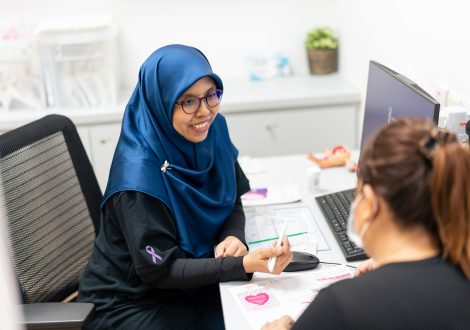
The cancer journey extends beyond medical treatment to include financial, emotional and social needs. However, SCS found that most individuals and families navigate this complex journey alone rather than as part of a clear care pathway. SCS calls for patient navigators to be embedded across multidisciplinary care teams, with roles standardised across hospitals and community care settings, and for a national navigation framework with clear professional standards and pathways.
Key findings:
- Survey respondents rated support during the transition from treatment into survivorship at a median of just 4.89 out of 10 – a signal that guidance is lacking at the moment when patients are discharged and need help returning to normalcy.
- 69% of survey respondents had never heard the term “patient navigator,” despite the role existing in some hospitals. Help, even when available, is not visible nor understood.
Ask 2: Strengthen Cancer Prevention Through Screening and Education
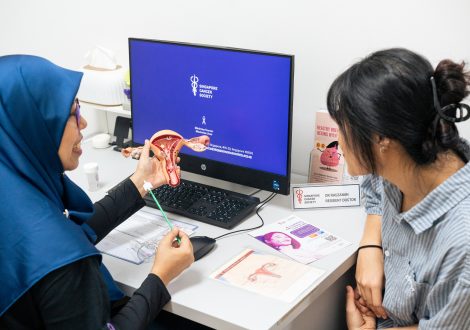
Fewer than half of Singapore’s population screens regularly for cancer. The paper suggests that low uptake is a symptom of episodic screening engagement and a deeper literacy gap that awareness campaigns alone may not close. SCS recommends that cancer prevention be integrated into schools, workplaces, and community programmes, in addition to establishing a population-based registry.
Key findings:
- 9 in 10 on our expert panel agreed that strengthening cancer prevention and early detection is a priority — one of the strongest consensus findings across the entire research process.
- Fewer than 60% of women correctly identified the recommended screening ages for breast and cervical cancers, while only 30% of male respondents knew the correct screening age band for colorectal cancer. This was despite more than 80% of survey respondents identifying as a cancer patient, survivor, caregiver, or healthcare provider. There are gaps in basic screening knowledge even among those directly affected.
Five Further Asks
Besides patient navigation and cancer prevention, SCS identified five additional Asks spanning the full arc of the cancer journey.
- Ensure accessible and affordable cancer treatment — Financial barriers should not prevent anyone from receiving life-saving care.
- Integrate rehabilitation needs assessment into the cancer care journey – Every patient should be assessed for rehabilitation needs and supported with appropriate care pathways based on clinical assessment.
- Support cancer patients in returning to work — Employers should provide fair opportunities and workplace support for those affected by cancer.
- Recognise that cancer affects younger people too — Early detection and targeted support for young patients are crucial.
- Build a strong support system for cancer patients – The community plays a vital role in the well-being of those affected by cancer.
The paper, including evidence and recommendations for all Seven Asks, can be accessed here.
Next Steps: From Research to Action
On 27 June, SCS and a group of patient advocates – cancer patients, survivors and caregivers – will convene a multi-stakeholders’ insights dialogue, bringing together individuals from the public, private, and people sector. Participants will engage with each of the Seven Asks and explore the feasibility of cross-sector action and implementation.
“I found out I had cancer through a Faecal Immunochemical Test (FIT), and it saved my life as it caught my colorectal cancer at stage 3A. Having been through the cancer journey, I know how much support is needed. This dialogue session brings together people from different fields to learn what the community is going through, and to participate in finding solutions,” said Mr Prabu Naidu, a survivor who is volunteering with SCS to facilitate at the insights dialogue.
On the same evening, SCS will present UnSEEn, its first dance-theatre production, informed by the Seven Asks, and featuring a cast and crew of people whose lives have been touched by cancer.
Mr Marcus Leong, UnSEEn’s creative director, said: “In creating UnSEEn, I drew on SCS’s research and spoke with patients, caregivers, social workers, and oncologists — the same voices that shaped the Seven Asks. Having also cared for my late mother through her ovarian cancer, I wanted the production to give form to the unseen challenges felt by patients and their families. There is something magical about how the arts can convey human experiences in a way data alone cannot. We hope to spark a broader public dialogue about what living with cancer feels like.”
About Singapore Cancer Society
Singapore Cancer Society (SCS) envisions a Singapore where we overcome cancer and live well. Established in 1964, SCS supports people through every stage of the cancer journey, from well to end of life. SCS minimises cancer and maximises lives by providing trusted information and care navigation, cancer screening and education, rehabilitation programmes, financial and welfare services, psychosocial and survivorship support, and home hospice care. Working together with healthcare, corporate, and community partners, SCS rallies the community to better support those affected by cancer. Consistently recognised for its commitment to high standards in governance and transparency, SCS has attained the coveted Charity Governance Award (2023) and multiple Charity Transparency Awards over the years.
https://singaporecancersociety.org.sg/