

Ovarian Cancer
Introduction
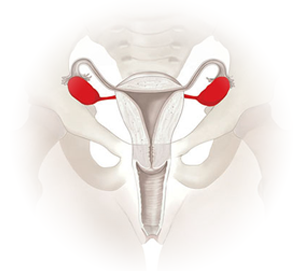
Women have 2 ovaries, each the size of a walnut. These are located in the pelvis on either side of the womb. The ovaries contain eggs and produce the female hormones oestrogen and progesterone.
Ovarian cancer can occur as a malignant tumour in one or both ovaries. Ovarian cancer is the sixth most common cancer amongst women in Singapore.*
Each ovary is made up of different cells, each performing its own function. When these cells grow abnormally, cancer occurs. Ovarian cancer can take various forms such as:
- Epithelial tumours – Most ovarian cancers arise from the surface epithelium of the ovary
- Germ cell tumours – These tumours occur in egg producing cells of the ovary
- Stromal tumours – These develop in the oestrogen and progesterone producing tissue that holds the ovary together
* Singapore Cancer Registry Annual Report 2023
Risk Factors
Although the cause of ovarian cancer is unknown, certain factors put women at a higher risk:
- Women with few pregnancies or who have never been pregnant.
- Late pregnancy
- A family history of the disease
- A high-fat diet
- Early onset of menstruation and late menopause
- Endometriosis
Signs & Symptoms

The following signs and symptoms may be indicative of ovarian cancer:
- Bloatedness and discomfort in the abdomen
- Change in bowel habits
- Flatulence and indigestion
- Abnormal vaginal bleeding
- Abdominal pain
- An enlarged abdomen
- Loss of weight or appetite
- Pain in the back or legs
- Urinary complaints
Women who experience one or more of these symptoms are advised to seek medical advice. During a physical examination, a doctor may be able to properly interpret these signs and symptoms and recommend further diagnostic tests.
Early Detection and Screening
There is currently no standard or routine screening for women who do not have any known risk factors for ovarian cancer. However, if there is a strong family of history of breast or ovarian cancer, it may be recommended for the women to go for genetic counselling and testing.
Annual pelvic examination and vaginal ultrasound, with or without blood test for tumour marker (CA 125), is recommended for women who are at high risk of ovarian cancer.
Diagnosis
Diagnosis is based on the physical examination of the pelvis. Ovarian cancer is suspected if:
- The ovary is enlarged
- There is an abdominal lump
- There is excessive fluid in the abdomen
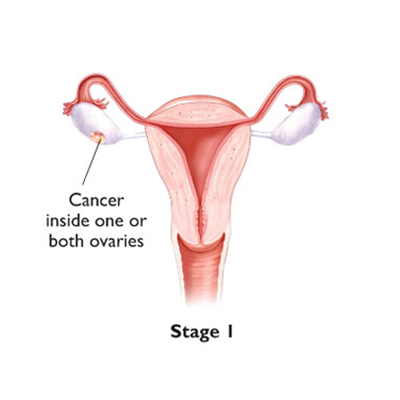
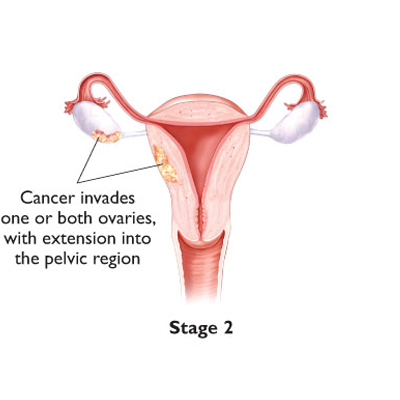
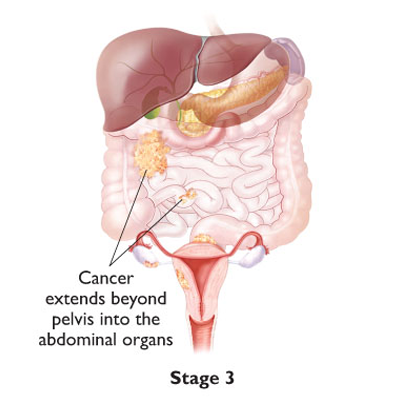
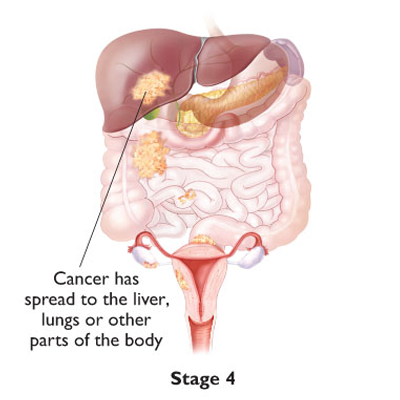
Additional diagnostic methods include:
- Ultrasound scans of the pelvis, which is performed either on the abdomen or the vagina.
- Blood tests to detect the tumour marker, CA-125, which is often higher in women with ovarian cancer. However, high CA-125 levels may be due to other causes as well.
- CT scans of the abdomen and pelvis to generate detailed pictures of areas inside the body. This allows doctors to diagnose ovarian cancer and study its spread.
- Obtaining a tissue sample for a biopsy. A laparotomy, an incision through the abdominal wall, is performed. If cancer is suspected, the entire ovary is removed (oophorectomy).
Treatment
Epithelial ovarian cancer can be treated in the following ways:
Laparotomy
In a laparotomy, an incision is made through the abdominal wall and tissue samples are removed and analysed. A biopsy of these tissue samples will indicate the type and extent of the cancer.
Because of the pervasive nature of ovarian cancer, it is common for extensive surgery to be prescribed. If a diagnosis of ovarian cancer is confirmed, the ovaries, fallopian tubes, uterus, cervix, omentum (thin tissue covering the stomach and intestines), lymph nodes, and all visible tumours will be removed. At advanced stages, where cancer has spread into the abdomen, the pelvic lymph glands and any secondary cancers in the abdomen are also removed.
For women who wish to preserve their childbearing abilities, it is sometimes possible to remove only the affected ovary and fallopian tubes.
Chemotherapy
Chemotherapy is usually recommended for women in the advanced stages of ovarian cancer. For women in the early stages of ovarian cancer, chemotherapy can also be given after surgery to prevent recurrence.
Radiotherapy
Radiotherapy is occasionally used, especially if the tumour is confined to the pelvis. It is also used to destroy cancer cells that remain after surgery.