

Screening For Breast Cancer
Breast cancer is the most common cancer among women in Singapore. Each year, over 2,000 women are diagnosed with breast cancer, and over 400 die from the disease*. 1 in 12* women will get breast cancer in their lifetime by 75 years of age.
However, early detection greatly increases the chances of survival.
Mammograms remain the most reliable screening tool for breast cancer. They can detect the presence of cancerous lumps even before they can be felt by hand.
Women between the ages of 40-49 are recommended to get a mammogram done once every year. Women aged 50 and above are recommended to get a mammogram done once every 2 years.
Women aged 20 and older are also recommended to do a monthly breast self-examination to be familiar with the condition of their breasts.
* Singapore Cancer Registry Annual Report 2023
What is a mammogram?
A mammogram is a low dose X-ray examination of the breast to detect abnormalities before they can be felt. It works by collecting images of the breast from various angles.
Where can I get a Mammogram?
Screen at SCS Clinic @ Bishan
SCS Clinic @ Bishan offers mammogram screening at no cost for eligible individuals. Our team will contact you within 5 working days to schedule an appointment, subject to availability.
Detailed Eligibility Criteria:
- Singaporean woman aged 50 years and above
- Possess a valid Community Health Assist Scheme (CHAS) card, either orange or blue
- Have not undergone a mammogram in the last 24 months
- Have no breast symptoms such as breast lumps or blood-stained nipple discharge
- Have not been breastfeeding for the past 6 months
- Have not received breast implants
Community Mammobus Programme
A community programme by Singapore Cancer Society, Breast Cancer Foundation and National Healthcare Group Diagnostics.

For: Singaporean/PR females aged 40 & above*
Frequency: Every year for females aged 40-49. Every 2 years for females aged 50 & above
Subsidised Rate for Mammogram on Mammobus
|
Fees (Subsidised rate): |
1st Time Screener |
Repeat Screener |
|
Singapore Citizen |
$0 |
$10 |
|
Permanent Resident |
$25 |
$35 |
Detailed eligibility criteria
- Singaporean or Permanent Resident
- Women aged 40 years old and above
- Have not undergone a mammogram in the last 12 months (40-49 years old) / 24 months (50 years old & above)
- Have no breast symptoms such as breast lumps or nipple discharge
- Have not been breastfeeding for the past 6 months
- Not pregnant
- Patients with mobility aids are advised to inform the organiser of any accessibility needs when registering interest.
Events
-
-
Mammobus at Pasir Ris Zone 11 Residents’ Network
Pasir Ris Zone 11 Residents' Network Block 140, Pasir Ris Street 11, #01-171, SingaporeCall 6581 7834 to register.
-
Mammobus at Rivervale Court Residents’ Network
Rivervale Court Residents' Network Block 110 Rivervale Walk #01-14, SingaporeCall 6875 5376 to register.
-
Mammobus at Nee Soon Link CC
Nee Soon Link CC 413 Yishun Ring Rd, #01-1887, SingaporeCall 6684 1827 to register.
-
Mammobus at Feng Shan CC
Feng Shan CC 20 Bedok North Street 2, SingaporeCall 6449 5136 to register.
-
Mammobus at Henderson CC
Henderson CC 500 Bukit Merah View, SingaporeCall 6271 0168 to register.
-
Mammobus at Toa Payoh Central CC
Toa Payoh Central CC 93 Toa Payoh Central, SingaporeVisit https://bcf.org.sg/programmes/community-mammobus to register.
-
Mammobus at Sembawang CC
Sembawang CC 117B Canberra Cres, #01-370, SingaporeCall 6752 7212 to register.
-
Mammobus at PAP Marsiling Branch
PAP Marsiling Branch Block 30 Marsiling Drive #03-301, SingaporeCall 6430 7800 to register.
-
-
Mammobus at Bedok CC
Bedok CC 850 New Upper Changi Road, SingaporeCall 6442 5317 to register.
-
Mammobus at Punggol 21 CC
Punggol 21 CC 80 Punggol Fld, Singapore, SingaporeCall 6312 0508 to register.
-
Mammobus at Siglap CC
Siglap CC 151 Bedok S Rd, SingaporeCall 6449 8040 to register.
-
Mammobus at Radin Mas CC
Radin Mas CC 51 Telok Blangah Crescent, Singapore, SingaporeCall 6273 5294 to register.
How to Prepare for Your Mammogram
Preparation
- Do arrive 15 mins before your appointment time for registration.
- Wear a comfortable two-piece outfit as participants will be required to undress from waist up.
- Do not apply powder, cream, or perfume on your chest and underarm area before the screening.
- If you are or suspect yourself to be pregnant, please inform the radiographer before the mammography screening.
Procedure
- Before your mammogram, a healthcare professional will conduct a clinical breast examination.
- After this, a female radiographer will position and scan your breast between two flat plates, one breast at a time.
- Your breasts will be compressed for a few seconds during this scanning process.
Results
You will receive your mammogram results 4-6 weeks after the test is done. Your result will indicate whether your mammogram is normal or abnormal.
An abnormal result from a mammogram does not automatically mean that a woman has breast cancer. A large proportion of abnormalities are caused by other factors.
Women whose mammogram results indicate abnormalities will be directed to take follow-up tests such as a repeat mammogram and/or an ultrasound scan.
For women whose abnormal results remain suspicious, they will be directed to undergo a surgical biopsy to confirm or rule out a diagnosis of cancer. This is a small surgical procedure to remove the abnormality in the breast for laboratory analysis. This procedure is usually performed under general anaesthesia as a day surgery.
FAQS
I have no symptoms, should I still attend mammogram screening?
According to the Singapore Cancer Registry 2023, 1 in every 12 women in Singapore may develop breast cancer by age 75.
Given that there’s still a risk of developing breast cancer, it’s still important to be vigilant even if you feel fine. Early breast cancer may not have symptoms. Breast cancer screening using mammography is the best way of detecting cancer when it is so small that you cannot feel it.
When detected at the early or pre-cancerous stage, breast cancer may be treated with simpler treatment and prevented from progressing to invasive cancer
Are mammograms painful?
A certain amount of compression of the breast is required to obtain a clear image on the mammogram. You may expect some discomfort or pain. The compression is similar to feeding of getting your blood pressure taken. Should you experience pain, please inform the radiographer immediately.
For less discomfort, you may consider scheduling your mammogram 7 to 10 days after the start of your period; where your breast are least tender. You may consider taking one or two painkillers (e.g. Paracetamol) right before the procedure.
Are mammograms harmful?
A common perception is that mammograms are harmful to the body and may increase existing risk of cancer as they expose women to radiation during the screening process. However, in actuality, radiation exposure during mammograms is very low. Correspondingly, the health risk to women is also very low.
Is there any proof that mammograms work?
Yes. Studies show that regular breast screening in women aged 40 years and above can reduce the mortality rate from breast cancer by up to 50%. This translates into lives saved.
Are mammograms effective for all women?
Studies have shown that breast screening is most effective in women between the ages of 50 and 70. The effectiveness of breast screening for women in their seventies is not as apparent.
Where can I go for a mammogram?
Mammogram facilities are available in numerous breast screening centres island-wide. The Ministry of Health launched a nationwide campaign to screen women above the age of 50 for breast cancer. Under this campaign, the cost of mammograms is heavily subsidised.
Mammograms are available as part of a general health check in most restructured hospitals and specialist outpatient clinics.
Mammograms are also provided at the SCS Clinic @ Bishan as well as part of the Community Mammobus Programme by SCS, BCF, and NHGD.
What are the disadvantages of a mammogram?
Some women may experience pain resulting from the mammogram process. There is also a small health risk from radiation exposure.
At this time, no diagnostic test is 100 per cent accurate. It may be possible for healthy women to obtain a false abnormal result and for unhealthy women to obtain a false normal result. To mitigate this possibility, it is important for women to exercise vigilance by also performing monthly breast self-examinations.
Breast Self-Examination (BSE)
What is Breast Self-Examination (BSE)?
A breast self-examination (also sometimes known as BSE, a breast self-exam, or breast self-check) is a method for women aged 20 and above to check their own breasts for unusual changes.
Performing BSE every month helps women become familiar with how their breasts look and feel, so that changes can be detected early.
How to do a Breast Self-Examination (BSE)

Step 1: Look
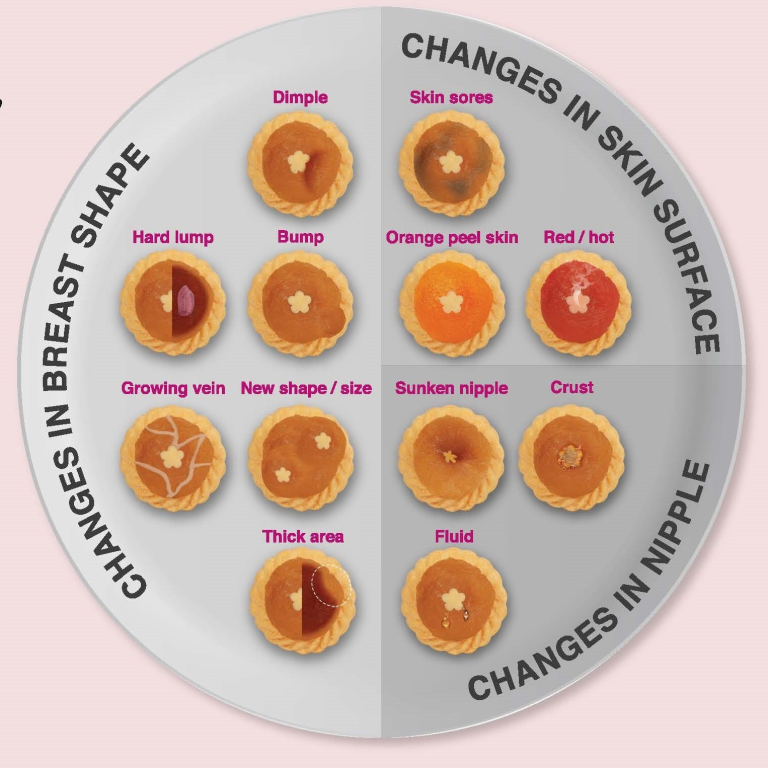
Put your hands on your hips and look out for changes in breast shape, skin surface and nipple abnormalities. Raise your arms above your head to look for changes (especially dimples) on the underside of your breast.
Step 2: Touch
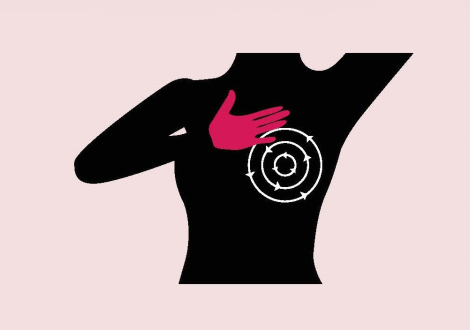
Touch and feel your breast using your middle 3 fingers, moving in a circular motion from outer area towards the nipple. Gently squeeze your nipple to check for any discharge.
Repeat this step for your other breast
Step 3: Check
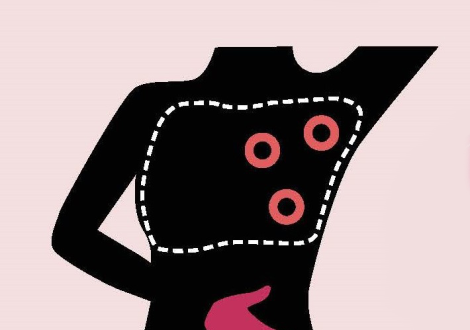
Check for lumps by examining your entire breast from your armpit to your cleavage with different pressure.
Repeat this step for your other breast.
Look out for these changes:
Next Steps
Consult your doctor should you detect any changes in your breasts.
Most lumps or changes in the breast are not cancerous. Nevertheless, it is important to have them checked as soon as possible as a precaution.
Frequency
A breast self-examination should be done once every month.
The best time to examine your breasts is 7 to 10 days after the start of your period, when your breast are least tender and least swollen.
If you no longer have periods, then choose a date that is easy to remember.
It is best done while lying down on the bed. You can also check while standing in the shower or in front of the mirror.