

Liver Cancer
Introduction
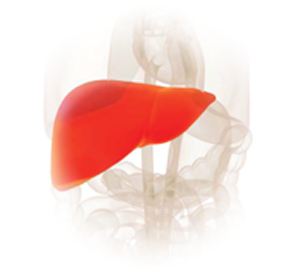
Liver cancer arises from hepatocytes (liver cells). Liver cancer often develops in livers that are severely damaged by longstanding diseases or chemicals. The liver becomes hardened and shrunken — a condition called liver cirrhosis.
When the liver cancer is small (less than 5cm in diameter), it often does not present symptoms. When tumours have become bigger and more advanced, liver cancer can infiltrate the liver capsule or obstruct the bile ducts. At this stage, symptoms may start appearing.
Liver cancer can form many nodules within the liver and spread into the blood vessels. These features make it difficult to surgically remove them. The liver is also the seat of secondary or metastatic cancers. In such cases, the main cancer forms elsewhere in the body and secondary deposits are formed in the liver. A common example is colorectal cancer spreading to the liver via the bloodstream.
Liver cancer is the fifth most common cancer in males in Singapore. *
* Singapore Cancer Registry Annual Report 2023
Risk Factors
The following factors increase the risk of liver cancer:
Chronic infection with hepatitis B and C virus
Alcohol abuse leading to scar tissue formation in the liver
Aflatoxin, a poisonous substance produced in a fungus affecting peanuts
Inherited disorders that cause damage to the liver
Certain chemicals like vinyl chloride, hydrocarbons, solvents, nitrites
Long-term use of anabolic steroids
Drinking water contaminated with arsenic
Most liver cancers can be prevented by public health measures that reduce exposure to known risk factors. For example, the most significant risk factor for liver cancer worldwide is chronic infection with the hepatitis B and C viruses. Family members of patients with hepatitis B are advised to check their hepatitis B status and seek immunisation if they are not infected. Children are advised to be immunised at birth for hepatitis B as part of the national immunisation programme. There is currently no immunisation method for hepatitis C.
Signs & Symptoms
Signs and symptoms of liver cancer do not usually appear until later stages of the disease. It is very often detected by chance as a result of an ultrasound test or CT scan for other unrelated problems. Some of the most common symptoms of liver cancer are:
- Loss of appetite or weight, fatigue, or general weakness
- Feeling very full after a small meal
- Persistent pain in the abdomen or near the right shoulder blade
- Swelling or fluid build-up in the abdomen
- Jaundice
- Itching
- Nausea and vomiting
Early Detection and Screening
When liver cancer is detected early, it is small, localised, and easier to remove surgically. Survival rates are also better when liver cancer is detected early. Screening is advised for high risk groups with liver cirrhosis and chronic hepatitis B infection. Regular screening may involve blood tests for alpha-fetoprotein (AFP) and liver function assessments every 3 months, as well as ultrasound scans of the liver every 6 months.
Diagnosis
Gastroscopy is usually more accurate than Barium meal X-ray examination. Once stomach cancer is confirmed on biopsy, other tests such as CT scans need to be carried out to assess the extent of spread.
Analysing one’s medical history and undergoing a physical exam
Blood test for alpha-fetoprotein (AFP), a tumour marker that is often raised in people with liver cancer
Ultrasound, CT, and MRI scans to confirm the presence and extent of liver cancer
Invasive tests such as angiogram to study the operability of the cancer
Biopsies of the suspected cancer is obtained for microscopic analysis
Bone scans to check for the spreading of the cancer to the bones
Treatment
Treatment options depend on many factors such as age, general health, personal preference, social circumstances, location, and extent of the tumour. Generally, surgery, chemotherapy, and radiation therapy are the 3 main methods of cancer treatment.
Surgery
Surgery involves removal of all cancer visible to the surgeon at the time of the operation. Complete removal may not be possible if the cancer is large or if several small cancers are present in different parts of the liver. People with cirrhosis are considered eligible for surgery only if their cancers are very small.
Chemotherapy
In chemotherapy, anti-cancer drugs are injected into the bloodstream and reaches all parts of the body. This makes this treatment potentially useful for cancers that have spread to other organs. Chemotherapy, however, also damages some normal cells.
Radiotherapy
Radiation therapy uses high-energy rays to kill cancer cells. Liver tumors can be treated with radiation by injecting small radioactive beads into the hepatic artery.
Other treatment methods include the use of cryosurgery, ethanol injection, and high energy waves to destroy liver cancer. For example, cryosurgery destroys liver tumours by freezing them. This method has shown promise in delaying its progress. For more advanced liver cancers, targeted therapy could be used to prolong patients’ survival. In selected cases, a liver transplant is a definitive treatment for liver cancer.